


You have decided to build your product using Java. The next step is to define your budget and choose how your development team will be structured. This decision has long-term consequences because Java systems often run for years and require continuous development, scaling, and maintenance.
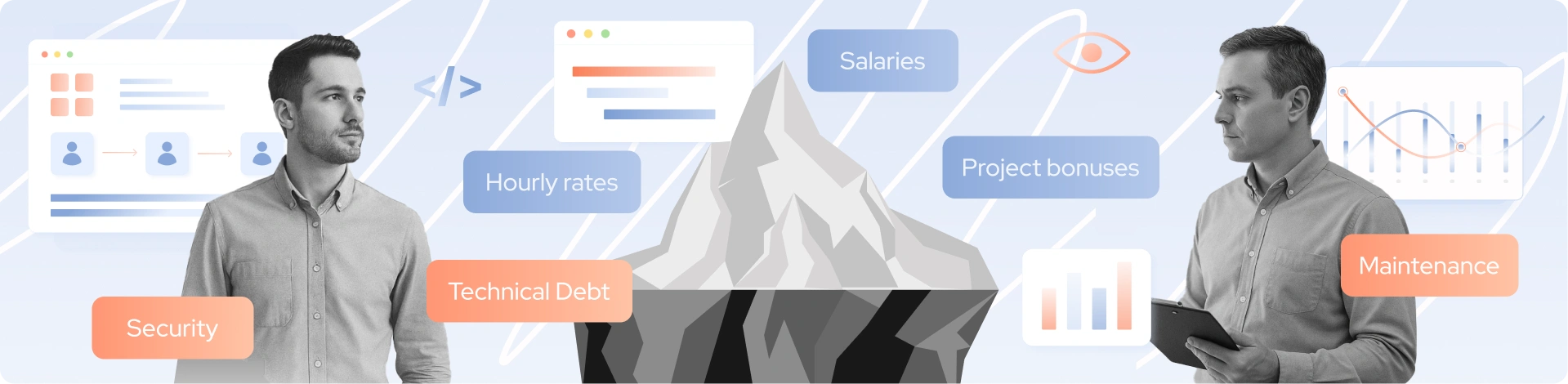
Many teams begin by comparing hourly rates or salaries. This creates a narrow view of Java software development cost and often leads to underestimation. A lower hourly rate does not guarantee lower total cost if delivery slows down or poor decisions require rework later in the process.
The real question is broader. Which development model will give you the best return over time? Should you build an in-house team, outsource development, or combine both approaches?
This guide answers those questions with practical insights, real cost ranges, and clear decision frameworks that help you move from estimation to decision.
Why this decision matters in 2026
Java remains a dominant choice for enterprise systems, SaaS platforms, and high-load applications. Demand for experienced developers continues to grow, increasing salaries and extending hiring timelines. Companies must balance the need for skilled engineers with pressure to control costs and deliver faster.
Gartner reports that global IT spending is not only growing steadily, but accelerating. Worldwide IT spending is projected to reach $6.31 trillion in 2026, representing a 13.5% increase year over year, driven largely by investments in AI, cloud infrastructure, and enterprise software.
Software spending alone is expected to grow at double-digit rates, while data center and cloud investments continue to expand as companies modernize infrastructure and support AI workloads. The outsourcing market is expected to reach over $800 billion by 2029, growing at an annual rate of more than 8%, which highlights its increasing role in global software development strategies.
These trends increase the importance of choosing the right development model. A slow hiring process or inefficient team structure can delay your product launch and increase long-term cost. Companies that align their team model with project needs maintain better control over both delivery speed and budget, which becomes a competitive advantage over time.
Understanding Java software development cost beyond hourly rates
Hourly rates and salaries are easy to compare, but they represent only a portion of total cost. A realistic estimate must include the full lifecycle of your product, from development to maintenance and scaling. Ignoring these additional layers often leads to unexpected expenses after launch.
A complete cost structure includes:
- Development effort across backend, frontend, and QA
- Infrastructure, such as cloud services and deployment pipelines
- Maintenance, including updates and bug fixes
- Scaling costs tied to performance and user growth
- Cost of delays and rework
You can use a practical formula to make these components tangible:
Each element behaves differently over time. Development is front-loaded, while maintenance and infrastructure continue throughout the product lifecycle. Delay and technical debt costs are less visible but often have the biggest financial impact.
To make this more concrete, consider a mid-scale SaaS product:
- Initial development: €120,000
- Infrastructure (first year): €25,000
- Maintenance (20% annually): €24,000
- Scaling improvements: €30,000
- Delay cost (2-month delay in launch): €10,000
- Rework due to early architecture issues: €13,000
In this example, the initial development represents less than half of the total cost. The remaining expenses come from operational and strategic factors that are often underestimated during planning.
This is why focusing only on hourly rates leads to poor decisions. A slightly higher upfront investment in experienced teams or better architecture can reduce maintenance, scaling, and rework costs significantly over time.
Java development cost by project type
Cost varies significantly depending on the type of product you are building. Without this context, general estimates can be misleading and difficult to apply to real scenarios. Understanding your project category helps you align expectations with realistic budgets.
Typical cost ranges:
Each level introduces additional complexity. Let’s explore the main cost drivers in more detail.
1. Number of features and integrations
More features increase development and testing effort. A basic MVP may include simple user flows and minimal logic. A SaaS product often integrates with payment systems, CRMs, or external APIs, which adds complexity and ongoing maintenance. For example, integrating a payment provider requires handling transactions, errors, and updates over time.
2. Performance and scalability requirements
Systems with higher performance needs require more advanced architecture. A small app can run on a single server, but a growing platform may need load balancing, caching, and distributed services. Real-time features like notifications or chat further increase complexity and infrastructure cost.
3. Security and compliance needs
Handling sensitive data increases both development and operational effort. Basic apps rely on standard authentication, while enterprise systems require audit logs, access controls, and regular security testing. For example, fintech or healthcare platforms must meet strict regulatory standards, which adds cost at every stage.
4. Expected user load
Higher user volume requires stronger infrastructure and system design. A platform serving thousands of users needs auto-scaling, optimized databases, and monitoring tools. For example, an e-commerce system must handle traffic spikes without performance issues, which increases both setup and ongoing costs.
Understanding these drivers helps you estimate costs more accurately and align your budget with real technical requirements.
In-house Java development cost breakdown
Salaries and total compensation
Hiring an in-house Java team creates a stable but expensive cost base. Salaries vary by region, but experienced developers command strong compensation across most markets. This makes hiring one of the largest cost components in your budget.
Glassdoor shows that senior Java developers in the United States earn significantly higher salaries compared to those in Europe. The average salary is around $165,000-$168,000 per year, with a typical range between $125,000 and $218,000 depending on experience and location.
Top earners can exceed $270,000 annually, especially in high-demand regions or specialized industries such as finance or large-scale SaaS platforms.
Employers also cover benefits, taxes, equipment, and workspace. These additions increase total compensation by 20 to 40%. When multiplied across a full team, the financial impact becomes substantial and requires careful planning.
Team composition and monthly cost
A complete Java team includes multiple roles that directly impact delivery speed and system quality. Each role contributes to different aspects of development, from writing code to maintaining infrastructure. Missing roles often lead to bottlenecks or quality issues.
Estimated monthly team cost (US market):
This cost remains constant regardless of workload. During slower periods, companies still pay full salaries and overhead, which reduces financial flexibility and increases pressure on budget planning. In high-cost markets like the US, this effect is even more noticeable, especially for early-stage companies or teams with fluctuating development needs.
Time-to-productivity cost
New hires do not arrive fully productive on day one. Even experienced Java developers need time to understand your architecture, business logic, and internal workflows. This ramp-up phase is easy to underestimate, but it has a direct impact on both cost and delivery speed.
Recent data confirms that ramp-up takes longer than most teams expect. New hires typically need 3 to 8 months to reach full productivity, depending on system complexity and onboarding quality.
For technical roles such as software engineers, the average time-to-productivity is around 90 days, with a median of about 65 days across knowledge-based roles. In more complex environments, ramp-up can extend to 3 to 9 months or longer.
In practice, the ramp-up curve often looks like this:
- Month 1: figuring out the codebase, tools, and how things actually work
- Month 2: contributing with support, asking a lot of questions
- Month 3: starting to work more independently, but still learning the edges
During this period, you are paying full salary while output is still ramping up. It is not a problem, it is expected. The key is to account for it when estimating timelines and budgets, especially for complex Java systems where learning the architecture takes time.
Hidden in-house costs
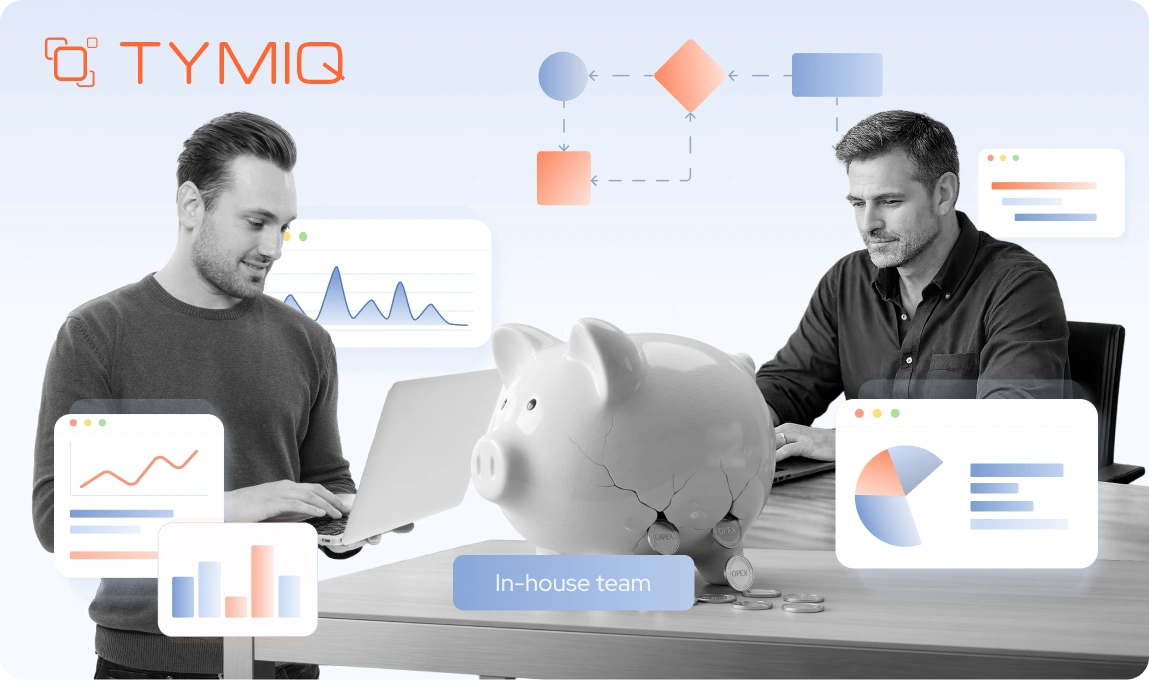
In-house development includes indirect costs that are often underestimated during planning. These costs accumulate over time and can significantly increase total expenditure.
Common hidden costs:
- Recruitment fees and hiring time
- Employee turnover and replacement
- Training and onboarding
- Idle time during low workload
These factors make in-house development a fixed cost model with limited flexibility. Companies must plan for these expenses to avoid budget surprises.
Outsourcing Java development cost breakdown
Hourly rates by region
Outsourcing provides access to global talent with flexible pricing. Rates vary depending on location, experience, and vendor maturity. This variation allows companies to optimize cost while maintaining quality.
Clutch tracks these rates across markets:
The spread between regional rates creates a clear cost advantage. Companies can reduce development expenses significantly by working with teams in Eastern Europe or Asia instead of higher-cost markets.
Industry data backs this cost advantage. Studies show that outsourcing can reduce development costs by 30 to 50%, depending on region and project structure. At the same time, cost is no longer the only driver.
Recent data shows:
- 63% of companies outsource primarily to reduce costs
- 65% use outsourcing to focus internal teams on core business
- 53% rely on outsourcing to access skills they cannot hire locally
With that said, companies use outsourcing to balance cost, speed, and access to expertise. Lower hourly rates matter, but the bigger impact comes from faster delivery and the ability to scale teams without long hiring cycles.
In practice, this means companies are not simply choosing the cheapest region. They are choosing the most efficient combination of cost, talent, and delivery speed, which often leads to outsourcing or hybrid models.
Pricing models
Outsourcing companies offer several pricing models depending on project scope and requirements. Choosing the right model affects both cost predictability and flexibility.
Common models include:
- Hourly billing for evolving requirements
- Fixed price for a clearly defined scope
- Dedicated teams for long-term collaboration
Each model has trade-offs, so companies should match pricing structure to project complexity and stability.
Cost advantages of outsourcing
Outsourcing changes how costs behave over time. Instead of maintaining a full-time team, companies pay for active development work. This creates a more flexible financial structure.
Key advantages:
- Faster project start without hiring delays
- Ability to scale team size based on demand
- Access to specialized expertise
This flexibility is particularly valuable for startups and companies with changing workloads.
What impacts Java development cost the most

Certain factors can significantly increase development cost, but their impact depends on your starting point. The estimates below assume a baseline of a mid-scale Java application with standard features, monolithic architecture, and no advanced scaling or compliance requirements.
Combining these factors can increase both complexity and cost faster than expected. For example, a system that includes microservices, real-time features, and strict security requirements will require more coordination, infrastructure, and testing than the sum of each factor alone.
From a decision perspective, not all cost drivers should be treated equally. Some are necessary based on your product requirements, while others can be delayed or simplified in early stages.
- Microservices are often unnecessary for MVPs, but valuable for scaling teams and systems later
- Real-time features add complexity quickly and should be included only if they directly impact user experience
- High security requirements are non-negotiable in regulated industries, but can be phased in for early-stage products
The biggest risk comes from poor architectural decisions. Choosing the wrong structure early can lead to rework, delays, and increased maintenance costs over time. In many cases, this has a larger financial impact than any individual feature or technology choice.
Choosing the right model depends on your priorities and constraints. A simple framework can help guide your decision.
- Need to launch within 6 months → outsourcing
- Stable long-term roadmap → in-house
- Need both speed and control → hybrid
This approach helps align your team structure with business goals and project requirements.
The hidden Java costs that shape the total budget
It often feels like finishing construction on a house, only to realize you still need to pay for electricity, heating, and maintenance to keep it running. That moment surprises many business owners after the initial development phase.
While earlier factors affect build cost, the following expenses appear after launch and stay with you over time. They are not tied to features, but to running, maintaining, and scaling the system.
DevOps and infrastructure
Modern Java applications rely on stable infrastructure to operate reliably in production. DevOps covers deployment pipelines, cloud environments, monitoring, and system observability, all of which require continuous setup, tuning, and maintenance.
Flexera highlights continued growth in cloud spending as companies scale infrastructure and workloads. Typical infrastructure scope includes:
- CI/CD pipelines for automated deployment
- Cloud hosting and storage (AWS, Azure, GCP)
- Monitoring and logging systems
- Backup and disaster recovery setup
Infrastructure costs often add 15 to 25% to the total development budget. These costs grow with usage and become a permanent operational expense rather than a one-time investment.
Maintenance and technical debt
Java applications are often built to run for years, which makes maintenance a core part of the total cost. After launch, teams must keep the system stable, secure, and compatible with evolving frameworks, libraries, and infrastructure.
This is not occasional work. It becomes a continuous engineering effort that grows with system complexity.
A 2026 Deloitte insights report shows that organizations are shifting focus from experimentation to long-term operational impact, which includes maintaining and evolving systems as they scale.
In practice, maintenance in Java projects typically includes:
- Updating dependencies such as Spring, Hibernate, and Java runtime versions
- Fixing bugs and improving performance under real usage
- Refactoring code to reduce technical debt
- Adapting to infrastructure changes, such as cloud or database updates
A commonly used benchmark in engineering planning is 15 to 25% of initial development cost annually, especially for systems with moderate complexity. This range increases when systems lack test coverage or rely on outdated architecture.
The biggest cost driver here is technical debt. In Java systems, this often comes from tightly coupled code, legacy frameworks, or rushed delivery. Over time, even small changes require more effort, which slows down development and increases the cost per feature.
Security and compliance

Last but not least, security and compliance become a continuous cost factor after launch. Many teams treat security as a final step, but in practice, it requires ongoing work across the entire lifecycle of a Java application.
Java systems often process sensitive data, which increases both technical and regulatory requirements. These obligations continue after deployment and require regular updates, monitoring, and verification as the system changes.
European Commission defines GDPR requirements, including data protection, breach notification, and user data rights.
When these requirements are not met, the impact is immediate. Recent data from IBM shows that in 2025, the average cost of a data breach reached $4.45 million globally.
This connects day-to-day security decisions with real financial risk.
Security-related costs include:
- Penetration testing and vulnerability assessments
- Data encryption and secure storage
- Role-based access control and audit logging
- Compliance audits and reporting
In regulated industries such as fintech or healthcare, these measures are mandatory. For other products, security still affects operational cost and risk exposure. Decisions made early in architecture and access control reduce future effort and limit potential losses.
The hybrid model in 2026
Hybrid models combine internal ownership with external execution, but the value depends on how responsibilities are set up in practice. Your internal team keeps control over architecture and product direction, while external teams focus on delivery and scaling the workload.
A typical setup includes:
- In-house technical leadership responsible for architecture and key decisions
- Outsourced development team handling feature delivery and daily development
- External specialists supporting DevOps, security, or performance when needed
This model helps reduce hiring pressure and speeds up delivery. At the same time, it introduces coordination overhead. Without clear ownership and structured communication, teams can drift out of sync, and costs increase instead of going down.
This is where an experienced outsourcing partner like TYMIQ becomes important. A strong partner does more than provide developers.
Here’s where our expertise can deliver the most value:
- Setting up architecture aligned with your current stage and growth plans
- Establishing workflows and development standards
- Integrating smoothly with internal teams
- Supporting DevOps, security, and performance from the start
Final thoughts
Java software development cost depends on more than hourly rates. Team structure, architecture, and long-term planning all influence total cost. Companies that consider these factors early are better positioned to control expenses and deliver successful products.
In-house development offers stability and control but requires significant investment. Outsourcing provides flexibility and faster execution, while hybrid models combine both advantages.
The best choice depends on how well the model supports your timeline, budget, and growth plans. Have a project in mind? Share a few details and get a realistic estimate tailored to your goals.



.svg)


