


.png)

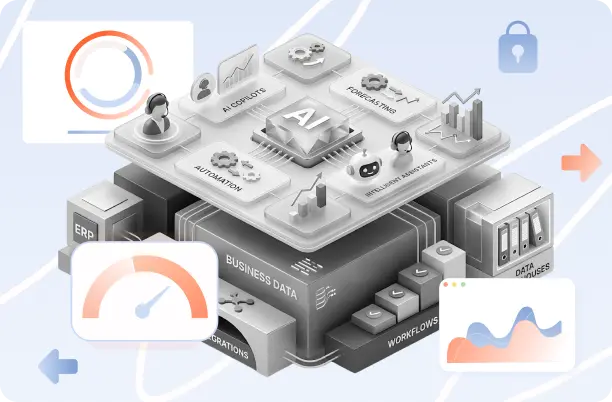

Businesses are investing heavily in AI, though many leadership teams still end up asking the same question: where are the productivity gains everyone expected?
Early results often look promising, like a chatbot saves support teams time, a forecasting model improves planning accuracy, an internal assistant helps employees find information faster – but what’s next?
Things start feeling more complicated once organizations try expanding those wins across departments and run into systems that were never designed to support connected, fast-moving AI workflows. Getting those capabilities to work smoothly across disconnected systems is often the harder part.
Below are seven reasons legacy systems increasingly become an AI bottleneck.
Why legacy systems are becoming an AI problem
Legacy systems were built for reliability. For years, enterprise software focused on stable operations, transaction processing, and record management. Fast experimentation rarely mattered because most business systems changed slowly. If an ERP platform worked consistently, many organizations saw little reason to revisit how information moved across teams.
AI changes those expectations. Machine learning systems, copilots, predictive analytics, and intelligent automation rely on connected information. Teams need data to move between departments without delays or manual workarounds. Technical teams also need environments where integrations, updates, and experimentation do not trigger months of engineering effort.
That difference helps explain why many AI pilots look successful early on, then become harder to scale. Teams often prepare data manually, monitor outputs closely, and support deployments with temporary fixes. Expanding across departments introduces more systems, dependencies, governance requirements, and operational complexity. Infrastructure gaps become much easier to spot once businesses move beyond a controlled environment.
A quick comparison helps show why some systems support AI more easily than others:
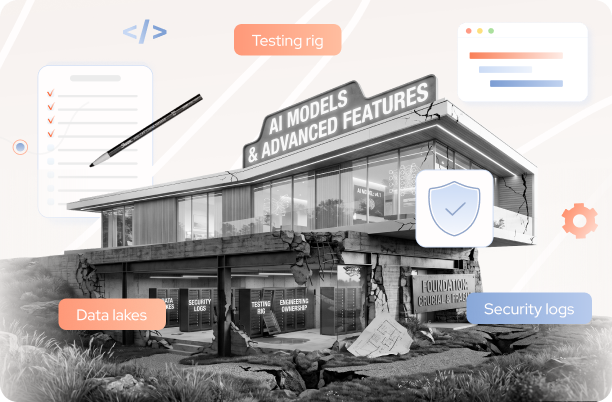
A useful way to think about it is office renovations. Updating one conference room feels manageable, however, expanding upgrades across an older building usually exposes limitations hidden behind the walls.
Legacy systems often create a similar experience during enterprise AI adoption.
1. Siloed data makes AI less useful
AI depends heavily on context. The quality of the information behind a system directly affects the quality of the output.
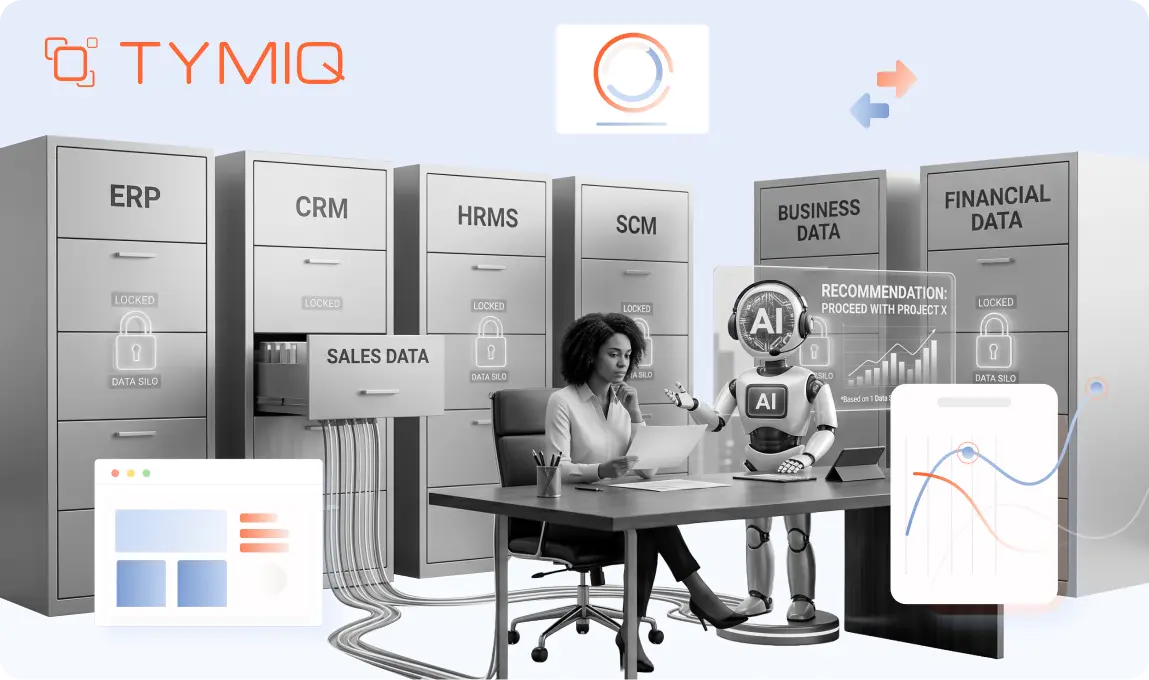
Consider a common workplace scenario: an employee asks an internal AI assistant for the latest customer contract details. The assistant finds an older document in a knowledge base and summarizes outdated pricing terms, missing the updated agreement stored in a separate CRM system.
The response sounds useful. It is still wrong.
This issue becomes more common when business information stays fragmented. Customer history may sit inside a CRM, billing data inside ERP software, support conversations inside ticketing tools, and project updates across spreadsheets or internal platforms.
AI systems perform best when information is complete and connected. Missing context, duplicate records, and inconsistent formats weaken reliability, making summaries, recommendations, and forecasts harder to trust.
Deloitte research continues to identify integration complexity as one of the biggest barriers to enterprise AI adoption. Data fragmentation sits near the center of the issue because systems often fail to give AI enough context to generate dependable outputs.
Customer support offers another good example. A company introduces an AI assistant to help representatives answer questions faster. The assistant can access ticket history but cannot retrieve purchasing data, billing details, or previous account activity. Responses sound useful at first glance, though support teams still switch between systems to fill in missing information.
At that point, automation starts feeling incomplete. Teams expected fewer manual tasks, though employees still spend time piecing information together because systems fail to communicate properly.
Businesses evaluating AI readiness often benefit from asking a few practical questions:
- Can teams access reliable information without jumping between systems?
- Does customer, operational, and financial data connect in useful ways?
- Are spreadsheets still filling reporting gaps between platforms?
If those questions expose recurring problems, infrastructure may need attention before expanding AI investments.
2. Rigid architectures slow experimentation
AI moves quickly – according to Stanford’s 2026 AI Index, organizational AI adoption reached 88%, and generative AI reached 53% population adoption within only three years, one of the fastest technology adoption curves on record.
Thus, teams need room to test workflows, improve prompts, retrain models, and connect new systems without waiting months for approvals. Many legacy environments struggle with this pace because they were built around predictability and tightly controlled change.
Older enterprise systems often rely on tightly connected architectures. A change in one system can affect several others, which increases both technical effort and operational risk. Development teams spend more time reviewing dependencies, coordinating approvals, and testing updates before anything moves forward.
Pilot projects can still work in this environment. Scaling is where things usually slow down.
This is where adaptable systems start making a difference. Deloitte points to a useful trend: organizations with more flexible technology foundations tend to adopt new tools faster because teams can experiment and integrate without disrupting day-to-day operations.
Several signs often suggest architecture may slow AI adoption:
- Integrations take weeks or months to complete
- Product releases depend on long approval chains
- Small infrastructure changes affect several systems
- Teams hesitate to experiment because rollback risks feel too high
Long-term AI success often depends less on one impressive model and more on whether systems can evolve alongside business needs.
3. Poor API support limits AI integration
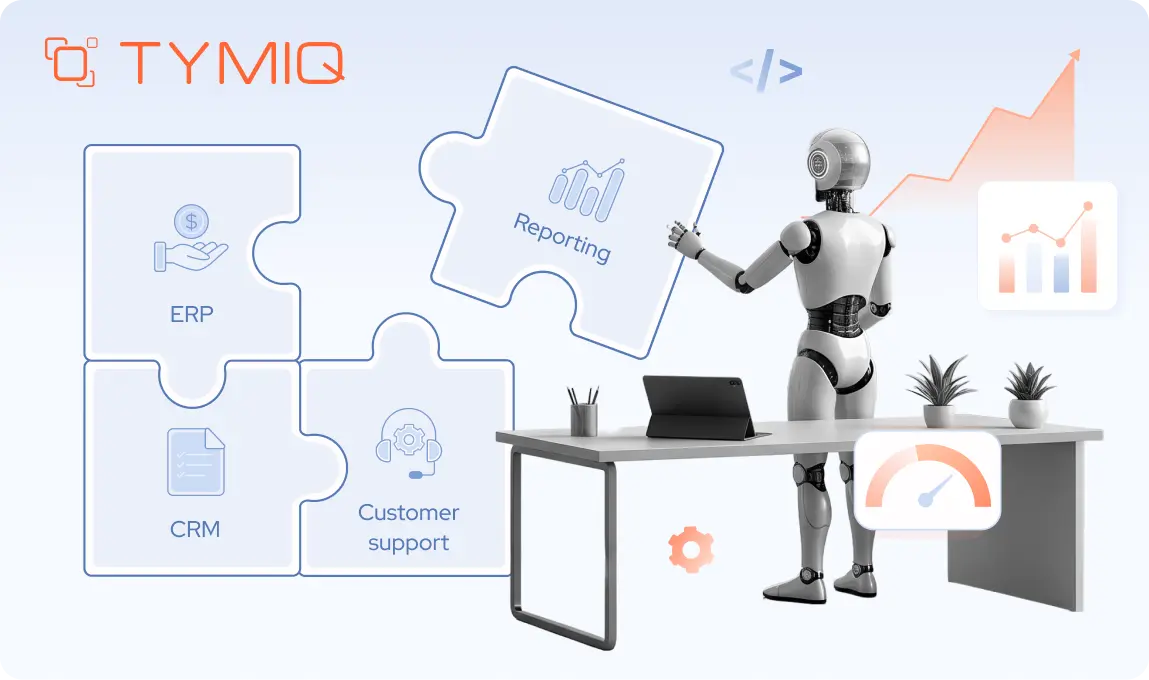
Enterprise AI works best when systems communicate well. A forecasting engine rarely succeeds with access to one dataset, and customer-facing assistants struggle when information stays trapped in separate systems. Good AI outcomes usually depend on what happens behind the scenes.
Many legacy environments were built before API-first architecture became standard. Integrations often depend on manual exports, middleware fixes, or engineering-heavy projects that take months to maintain. Teams may succeed in connecting systems temporarily, though scaling those integrations becomes harder over time.
A forecasting model may need ERP purchasing data, CRM demand signals, and warehouse inventory updates. Teams often discover those systems struggle to exchange information efficiently. Employees export spreadsheets, clean data manually, and move reports between departments before models can generate useful outputs.
The process starts looking familiar. AI enters the workflow, though the surrounding operations still rely heavily on manual work.
A quick API readiness check can reveal problems early:
Enterprise reporting increasingly points to the same pattern. A recent TechRadar analysis described an “AI ROI gap,” where organizations continue investing in AI but struggle to turn those investments into meaningful operational results because infrastructure cannot support implementation at scale.
As TechRadar puts it, many businesses are finding that “enterprise intelligence is stalling at the infrastructure level.”
That observation will sound familiar to teams moving beyond experimentation. Pilot projects may work in controlled environments, but things often become more complicated during broader rollout. Integrations multiply, dependencies grow, and older systems make it harder to maintain consistent workflows across the business.
4. Technical debt makes AI harder to scale
Technical debt rarely feels urgent during normal operations. Teams adapt because systems continue working, even if the underlying infrastructure grows harder to maintain over time. Temporary fixes accumulate, documentation falls behind, and older codebases stay in place because replacing them rarely feels like a priority.
AI changes the cost of those compromises.
Machine learning systems need regular updates, integrations, monitoring, and infrastructure changes. Technical debt increases the effort required to make those changes safely. Engineering teams often spend more time maintaining older systems than supporting new initiatives, which slows down experimentation and deployment.
Researchers increasingly discuss “AI debt” as a growing concern. Alongside technical debt, organizations also manage model debt, data debt, and configuration complexity. Existing infrastructure limitations often amplify those issues once AI enters production.
A business may launch one successful AI use case without much disruption. However, supporting ten across departments creates new demands around monitoring, governance, integrations, and maintenance. Over time, technical debt shifts from an IT issue into a broader business constraint because deployment becomes slower and harder to scale.
5. Security and compliance concerns slow adoption
Governance concerns are becoming harder to ignore as AI adoption expands. An IBM survey of CIOs and CTOs found many leaders still feel unprepared for large-scale deployment, particularly around oversight, policy development, and risk management.
Moreover, many technology leaders are making “high-stakes decisions with incomplete information.”
That concern feels familiar for organizations moving beyond experimentation. A pilot project may work well inside a controlled environment where teams closely monitor outputs and limit exposure.
Broader deployment raises harder questions. Who owns oversight? Which systems can access sensitive information? How do teams monitor outputs across departments without creating security or compliance risks?
Organizations often move more confidently when governance evolves alongside adoption. Many start with lower-risk use cases, establish access rules early, clarify ownership, and test deployment approaches before expanding into more sensitive workflows.
Several signs may suggest governance limitations are slowing AI adoption:
- Sensitive data permissions remain inconsistent across systems
- Teams lack visibility into how information moves between tools
- Compliance reviews delay most new deployments
- Ownership around AI oversight feels unclear
6. Slow deployment cycles kill AI momentum

AI pilots often look smoother than broader rollout. Teams work with clean datasets, closely monitor outputs, and solve problems quickly inside controlled environments. Production changes things. Systems suddenly need to connect with reporting tools, permissions, security requirements, and workflows spanning several departments.
Legacy systems tend to slow deployment for a few practical reasons:
- Teams need to validate integrations across reporting systems, APIs, and internal tools before updates can move forward.
- Access permissions and security requirements often add extra review steps before deployment.
- Downstream dependencies increase risk because even small changes can affect connected workflows.
- Older infrastructure usually supports slower release cycles, which makes testing and approvals take longer.
- Business-critical systems often require extra caution to avoid disruptions across multiple teams.
Slow deployment cycles become an AI bottleneck because production introduces technical requirements teams rarely face during testing. Older systems add dependencies, approvals take longer, and integrations become harder to manage across departments.
This helps explain why many organizations describe the experience as “pilot purgatory.” A proof of concept works, leadership supports expansion, but measurable business value takes longer to appear. As timelines stretch, momentum slows, and AI initiatives become harder to scale.
7. Fragmented systems make AI unreliable at scale
AI pilots often hide complexity because testing environments rarely reflect how systems behave in day-to-day operations. Teams usually work with clean datasets, limited integrations, and closely monitored outputs. Engineers step in when edge cases appear, analysts validate results manually, and temporary fixes help keep things moving.
Production environments tend to tell a different story. A model that worked reliably during testing may suddenly depend on live ERP updates, inconsistent CRM records, authentication systems, API reliability, access permissions, and workflows managed across multiple teams.
The following technical issues start surfacing once AI moves beyond controlled testing environments:
This is often the point where teams realize scaling AI introduces a different set of problems than testing it.
Moreover, many organizations still expect AI productivity gains to take time, particularly as deployment moves beyond experimentation and into broader operational use. Infrastructure readiness, integration complexity, and deployment maturity continue shaping how quickly businesses turn early AI investments into measurable outcomes.
What needs to be modernized before implementing AI?
Most organizations benefit more from identifying where existing systems will struggle once AI moves beyond testing and into production. The goal is practical: find the bottlenecks most likely to weaken outputs, slow deployment, or create unnecessary engineering work.
A useful starting point is to evaluate whether the current environment can support these five requirements:
Data consistency
AI systems depend on reliable inputs. If customer records vary between systems, reporting fields follow different naming conventions, or teams rely on manual spreadsheet cleanup, outputs become harder to trust. Data architecture often deserves early attention because model quality depends heavily on input quality.
System connectivity
Many AI systems fail quietly because they cannot access the right information at the right time. Teams often evaluate APIs, middleware, and integration layers first to understand whether systems exchange information reliably or still depend on exports and manual updates.
Deployment readiness
Pilots tolerate manual work. Production environments do not. Teams should assess whether infrastructure supports repeatable releases, rollback processes, dependency testing, and stable deployment cycles before expanding AI across workflows.
Governance and access controls
AI introduces new requirements around permissions, monitoring, auditability, and ownership. Teams usually move faster when governance expectations become clear before sensitive data enters workflows.
Observability and monitoring
Production AI systems need visibility. Teams should be able to track failures, performance changes, latency, data drift, and reliability issues without relying on manual troubleshooting.
The stronger approach usually involves identifying which area creates the biggest operational constraint and addressing it first.
In a nutshell
Let’s emphasize it again: legacy systems are not usually the problem by themselves. Many still power critical operations across industries without much trouble. The challenge starts when businesses expect systems built for stability to support AI technologies that depend on connected data, fast integrations, and constant iteration.
That is when familiar bottlenecks surface: siloed information, rigid architectures, weak integrations, technical debt, and growing governance complexity.
Luckily, businesses seeing stronger results tend to share one advantage: infrastructure that can adapt, connect information more easily, and support experimentation without slowing everything down.
Ask these questions before scaling AI across the business:
- Can teams access reliable information without switching between multiple systems?
- Do core platforms exchange data without heavy manual work?
- Are integrations stable enough to support repeated AI use cases?
- Can teams test and deploy updates without long delays?
- Are governance, permissions, and monitoring processes clearly defined?
- Does infrastructure support scaling beyond one successful pilot?
If several of these questions raise concerns, the issue may have less to do with AI capability and more to do with infrastructure readiness. The TYMIQ team is always happy to help untangle the technical side before small limitations turn into bigger operational problems.


.svg)


