


.png)

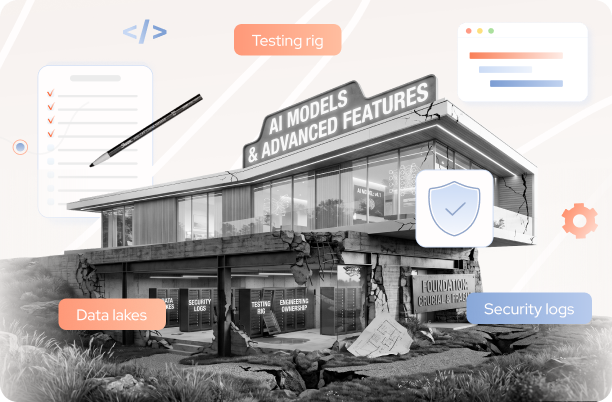
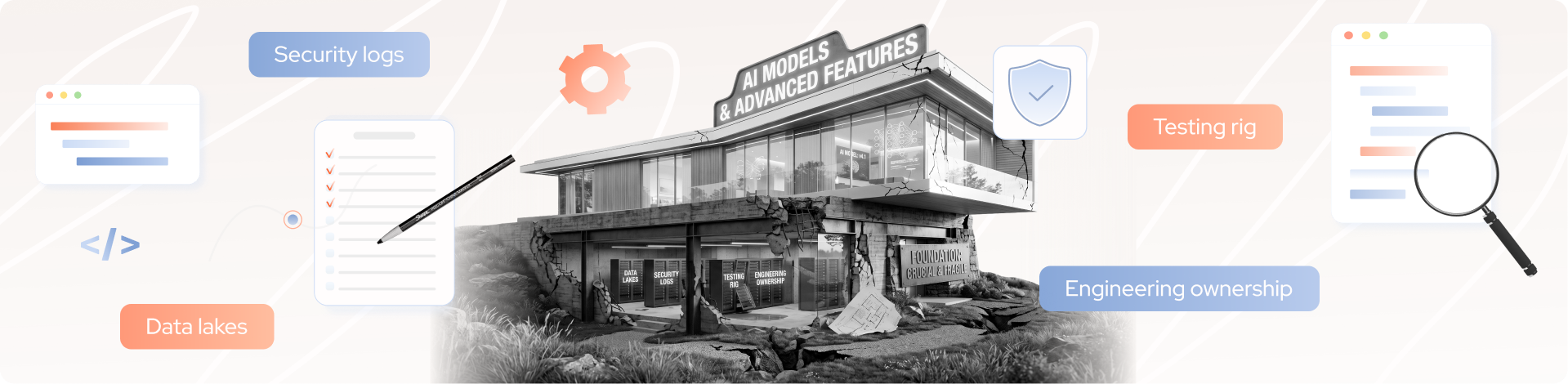
Your AI development proposal has six model names, three agent types, and a diagram with arrows going everywhere. Then you reach architecture, data access, testing, security, ownership, and production support, and find a few vague sentences.
McKinsey research found only 25% of director-level-and-above product and engineering leaders reporting meaningful AI acceleration, and 30% reporting lower team productivity. The teams pulling ahead changed their processes, roles, and verification alongside the technology.
A serious proposal makes the engineering plan visible before development starts.
Here is what it should contain, and what to challenge when it does not.
What should an AI development partner actually do?
An AI development partner takes an AI use case from a business or engineering requirement to production software. For enterprise teams, the work can span architecture, data, application development, integrations, security, testing, deployment, and operations.
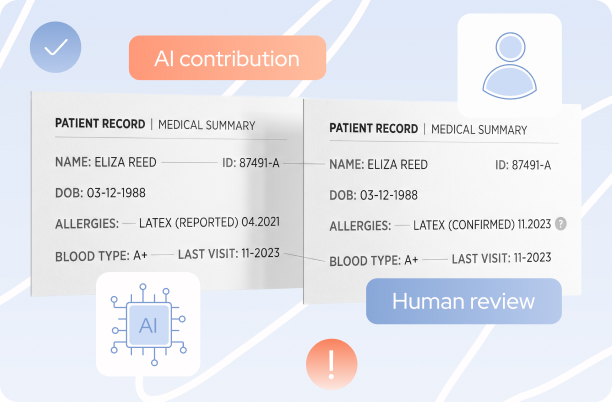
The partner also needs to fit AI into the existing software development lifecycle. A coding assistant can generate a function. An engineering partner needs to know where the function belongs, which services depend on the code, how the change gets tested, and who approves production release.
Accenture’s 2026 research found engineers and engineering leaders spending substantial time on documentation, reporting, information search, and meetings. The research argues for a connected engineering environment covering processes, tools, roles, decision rights, and data.
A serious AI development engagement can cover:
- Current architecture and AI readiness assessment
- AI use-case selection
- Application and data architecture
- Model evaluation and selection
- Enterprise integrations
- AI software development
- Security and governance
- Testing and evaluation
- Deployment and monitoring
- Documentation and knowledge transfer
- Post-launch maintenance
Look for clear connections between those activities. A proposal should name the systems AI will access, explain how generated output enters the engineering workflow, and define who owns approval at each important stage.
A useful comparison looks like this:
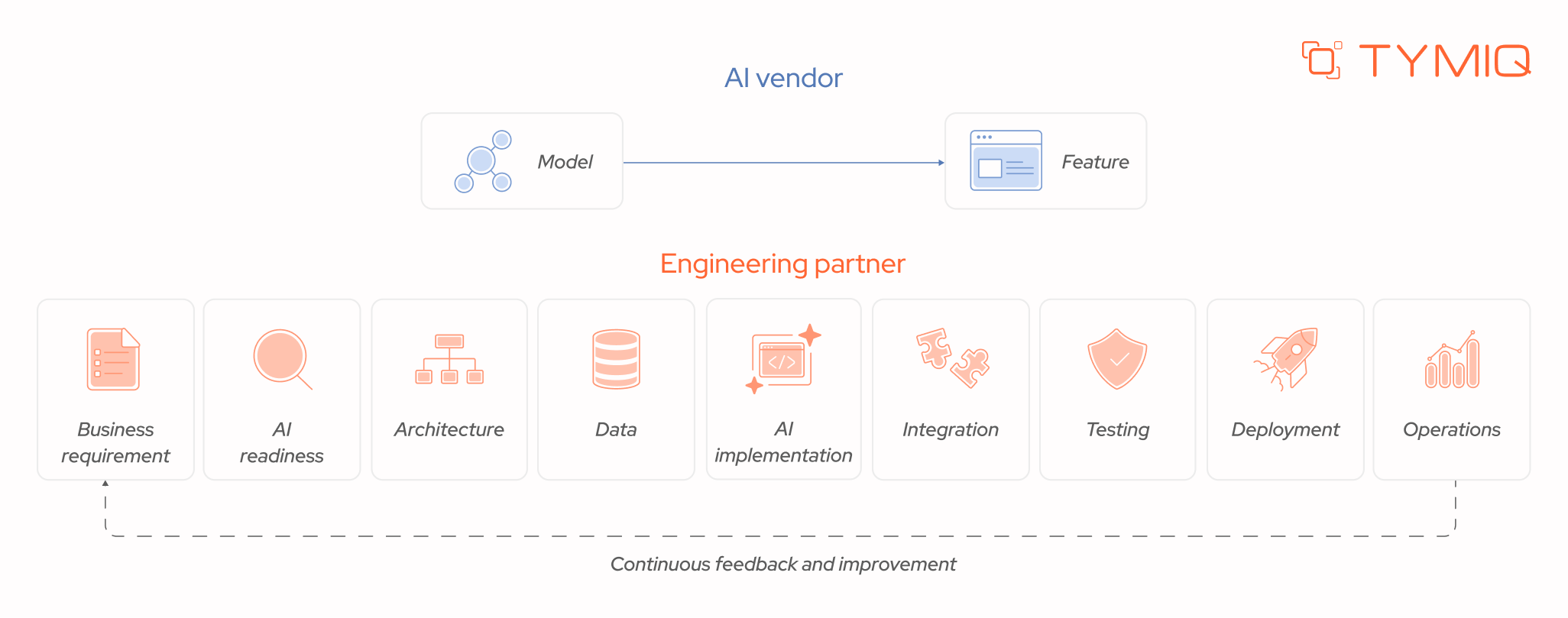
For enterprise software development, the second route requires software engineering depth alongside AI expertise.
How should you assess AI readiness before choosing a partner?
AI readiness means knowing whether your technical environment can carry the proposed use case. A partner should assess the starting point before recommending a large implementation.
In June 2026, Accenture and Carnegie Mellon University’s Software Engineering Institute launched an AI Adoption Maturity Model after reviewing more than 100 existing AI maturity efforts, conducting about 25 executive interviews, surveying nearly 600 practitioners, and running pilots with Fortune 500 organizations. The model examines dimensions including workflow re-engineering, risk and governance, data, engineering, and operations.
Before approving AI development services, ask a partner to examine:
- Application architecture and dependencies
- Source code and technical documentation
- Data availability and quality
- APIs and integration points
- CI/CD practices
- Testing maturity
- Security requirements
- Regulatory constraints
- Existing AI usage
- Technical debt
- Legacy systems
- Internal engineering skills
A useful assessment also names blockers. Missing test coverage, stale documentation, brittle integrations, or restricted data access can change the proposed delivery plan.

“Your organization is ready for AI.”
“The customer API and identity service can accommodate the proposed workflow, but repository documentation and integration tests need remediation before production.”
The second gives an engineering team something concrete to act on.
What should an AI development proposal include?
A useful proposal should let a CTO see the route from the current environment to production. Ten areas deserve close review.
1. What should the current-state assessment cover?
The technical plan should identify relevant systems, architecture, dependencies, data sources, technical debt, integrations, and constraints.
Weak:
“Review existing systems.”
Useful:
“Assess the customer API, authentication service, document repository, data warehouse, and CI pipeline to identify components requiring modification.”
The second version also creates a useful starting point for estimation.
2. How should AI use cases be defined?
How should AI use cases be defined?
Each use case needs a defined business or engineering purpose and a stated tolerance for being wrong. Support ticket classification survives a misroute. Test generation survives a weak assertion if mutation testing catches it. A schema migration proposed against production survives neither.
Common candidates:
- Support ticket classification
- Codebase analysis
- Document extraction
- Developer assistance
- Legacy code analysis
- Test generation
- Incident investigation
A prospective partner should explain why AI fits each task, and the answer should turn on the shape of the problem.
Probabilistic generation earns its place where the output space is large and verification costs less than production. Deterministic rules win wherever the logic can be written down, since a rule that can be tested beats a model that has to be evaluated. Anything irreversible belongs behind human review regardless of how well the model scores.
3. What should an AI architecture proposal show?
The architecture section should cover the model layer, application services, data sources, APIs, orchestration, identity, observability, and existing enterprise systems.
A generic AI diagram leaves too many decisions unresolved. Ask for data flows, trust boundaries, failure handling, and integration points.
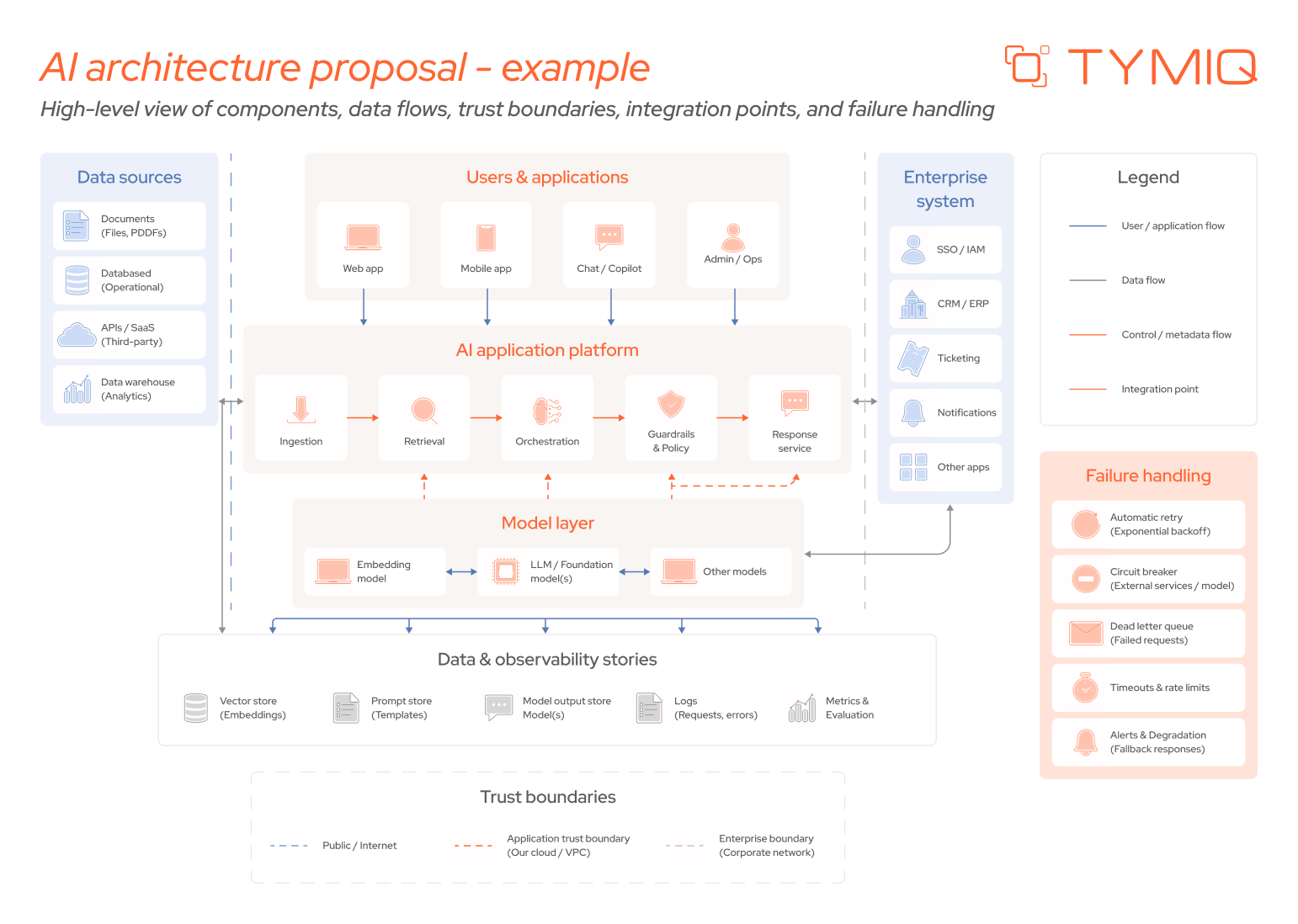
For an enterprise deployment, also ask where prompts, model responses, embeddings, logs, and evaluation data live.
4. What data requirements should an AI proposal specify?
The document should identify which data AI needs and how applications will access, process, store, and protect such data.
Review:
- Data sources
- Access methods
- Sensitive fields
- Storage
- Retention
- Permissions
- Geographic restrictions
- Data preparation
An AI development company should also state what the model must never access. A data boundary can matter as much as a data source.
5. How should a technology partner choose AI models?
Model selection should follow workload requirements.
Ask for evaluation criteria covering:
- Response quality
- Latency
- Cost
- Privacy
- Context requirements
- Availability
- Rate limits
- Vendor dependency
- Model replacement
IBM’s June 2026 study of 1,000 senior executives found major concerns around dependency and control:
A model recommendation should therefore include an exit plan. Which application services depend on the chosen provider? Can another model take over? What changes would follow from a model replacement?
6. How should AI integrations be described?
AI usually sits inside a wider software stack. The proposal should describe connections with repositories, APIs, CRM or ERP systems, data platforms, identity systems, CI/CD, observability, and internal applications.
Ask for system-level integration details:
Source system → authentication → data retrieval → model call → application logic → validation → output
That sequence makes assumptions easier to inspect before development begins.
7. What security and governance controls should appear?
Security language needs technical substance.
Look for defined controls around:
- Identity and access
- Sensitive data
- Model permissions
- Prompt and response logging
- Audit trails
- AI-generated code
- Security testing
- Production authorization
GitLab’s 2026 AI Accountability Report surveyed 1,528 DevSecOps professionals across six countries. The research found 80% saying AI adoption moved faster than governance policies, and 92% reporting governance challenges connected with AI-generated code.
A credible proposal should translate those concerns into permissions, approval rules, audit requirements, and production controls.
8. How should AI-generated software be tested?
Generated code needs verification across functional behavior, security, performance, regression, and model-specific evaluation. The order matters less than the coverage, since each layer catches a failure the others miss.
A proposal should spell out:
- Which tests run automatically
- Which AI outputs receive human review
- Which security checks apply
- How model quality gets evaluated
- Which changes need senior approval
- What happens when generated code fails validation
Testing is also where enterprise expectations are most explicit. IBM Research's empirical study drew on 57 developers and a review of 35 earlier surveys to examine AI coding assistants across program understanding, code generation, testing, and program repair, with attention to what professional enterprise use requires. Testing appears as one of the four core activities, not as a step appended after generation.
9. What should a delivery plan include?
A delivery plan needs more detail than “discovery, development, launch.”
Look for:
- Work phases
- Dependencies
- Milestones
- Acceptance criteria
- Team responsibilities
- Production-readiness requirements
- Deployment approach
- Handover activities
Each milestone should produce something concrete, such as an architecture decision, integration prototype, evaluation result, tested service, or production-ready release candidate.
10. What should ownership and post-launch support cover?
Ownership should cover source code, architecture documentation, prompts, model configurations, infrastructure, integrations, evaluation datasets, monitoring, and operational procedures.
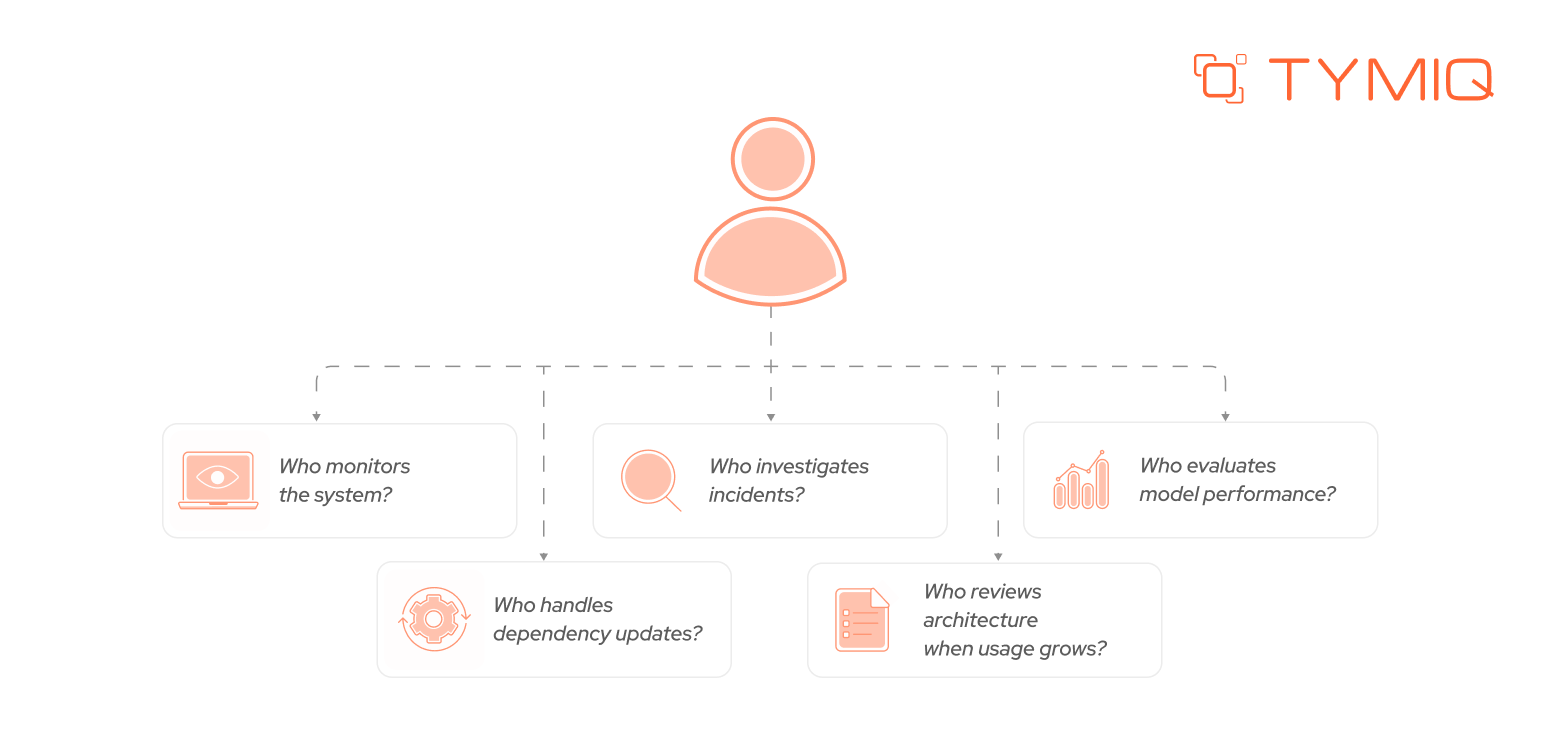
Those answers matter because AI systems operate inside changing software environments. Model behavior, vendor pricing, data volumes, dependencies, and business requirements can all change after launch.
How can you tell a strong AI proposal from a polished sales document?
Replace every mention of “AI” in the proposal with the actual engineering work.
If the document still describes APIs, data flows, security controls, tests, acceptance criteria, deployment, and ownership, you have a technical plan worth reviewing.
If most of the detail disappears once the AI terminology comes out, ask for another draft.
The more specific version gives procurement, engineering, security, and product teams something they can evaluate together.
How should you evaluate an AI development company?
Treat partner selection as a technical review with a commercial component.
Ask prospective teams:
- Which AI use cases have reached production?
- How do you assess existing architecture?
- How do you evaluate AI readiness?
- Which systems will the proposed AI solution access?
- How do you select models?
- How do you test AI-generated output?
- Which decisions require human engineering oversight?
- Who owns technical decisions?
- How does knowledge move back to the internal team?
- What happens after launch?
- Which metrics define success?
A partner's answers to the list above should sound like adoption decisions, not product preferences. Gartner's Software Engineering Technology Adoption Roadmap surveyed 117 software engineering leaders across 40 development technologies, including AI code assistants, agentic AI, synthetic data, and MCP, and tracked adoption plans against perceived risk and expected value.
What carries over to a vendor conversation is the report's structure. Adoption plans, perceived risk, and expected value are treated as three separate dimensions of one decision. A partner who answers the list above with model names has addressed none of them.
What should a technology partner be responsible for?
Responsibility needs to be explicit before development begins.
An engineering partner can own technical execution across architecture, implementation, integration, testing, security implementation, deployment preparation, documentation, and technical maintenance.
The client usually retains ownership of product priorities, business requirements, internal policies, regulatory decisions, and final accountability for business outcomes.
Both sides need clear ownership for requirements clarification, architecture decisions, risk review, acceptance criteria, governance, and knowledge transfer.
One useful test is to take a major project decision and ask three things:
- Who proposes it?
- Who approves it?
- Who owns the outcome?
A vague responsibility matrix can create delays later, especially around production incidents or architecture changes.
What should you look for in an AI modernization project?
Existing software changes the buying criteria.
Legacy applications can contain undocumented business rules, aging dependencies, limited test coverage, tightly coupled services, and integrations built around assumptions accumulated over years.
Software Improvement Group’s State of Software report found 71% of code with a low degree of security controls and estimated AI-generated code carried roughly twice the security risk violations of human-written code. The report also connects software quality and architecture discipline with safer AI adoption.
For AI modernization, ask the partner to assess:
- Architecture quality
- Dependency relationships
- Technical debt
- Documentation gaps
- Test coverage
- Security weaknesses
- Integration constraints
- Migration sequencing
A useful modernization plan can follow this route:
Legacy system → architecture assessment → dependency mapping → AI use-case selection → controlled modernization → behavioral testing → production monitoring
The proposal should identify where AI can accelerate work and where existing software needs remediation first.
How should AI development services be measured?
Success metrics belong in the engagement plan before development begins.
A useful set can cover four areas:
Nearly four in five executives see AI productivity gains. Fewer than one in three can prove it. IBM's August 2026 research puts the split at 79% against 29%, which is the difference between a team that feels faster and a team that can show where the time went. The four areas above exist to make the second claim possible.
That gap gives buyers a useful test. Ask a technology partner to define the baseline, the target, the measurement period, and the business result attached to the initiative.
“Increase AI usage” is weak.
“Reduce median lead time for approved API changes by 20% without increasing change failure rate” is measurable.
How do you spot a weak AI development proposal?
Most weak proposals fail in the same places. Send one back for another review when:
- Model names appear before the business problem.
- AI use cases have no acceptance criteria.
- Architecture diagrams omit existing enterprise systems.
- Data access and human approval are left undefined.
- "Scalable" appears without load or latency requirements.
- Testing gets one generic sentence.
- Success metrics track AI usage rather than delivery or business results.
- Integration appears as a line item rather than a workstream. Enterprise systems rarely expose what the diagram assumes they expose.
- Model choice is presented as permanent, with no abstraction layer and no fallback for the moment the provider is unavailable.
- Discovery is priced as a formality, which means the estimate rests on your description of the system rather than on the code.
- Post-launch work, asset ownership, and knowledge transfer are missing, so the capability leaves when the contract ends.
The subtlest warning sign is the one that never appears on the page: assumptions hidden inside the estimate.
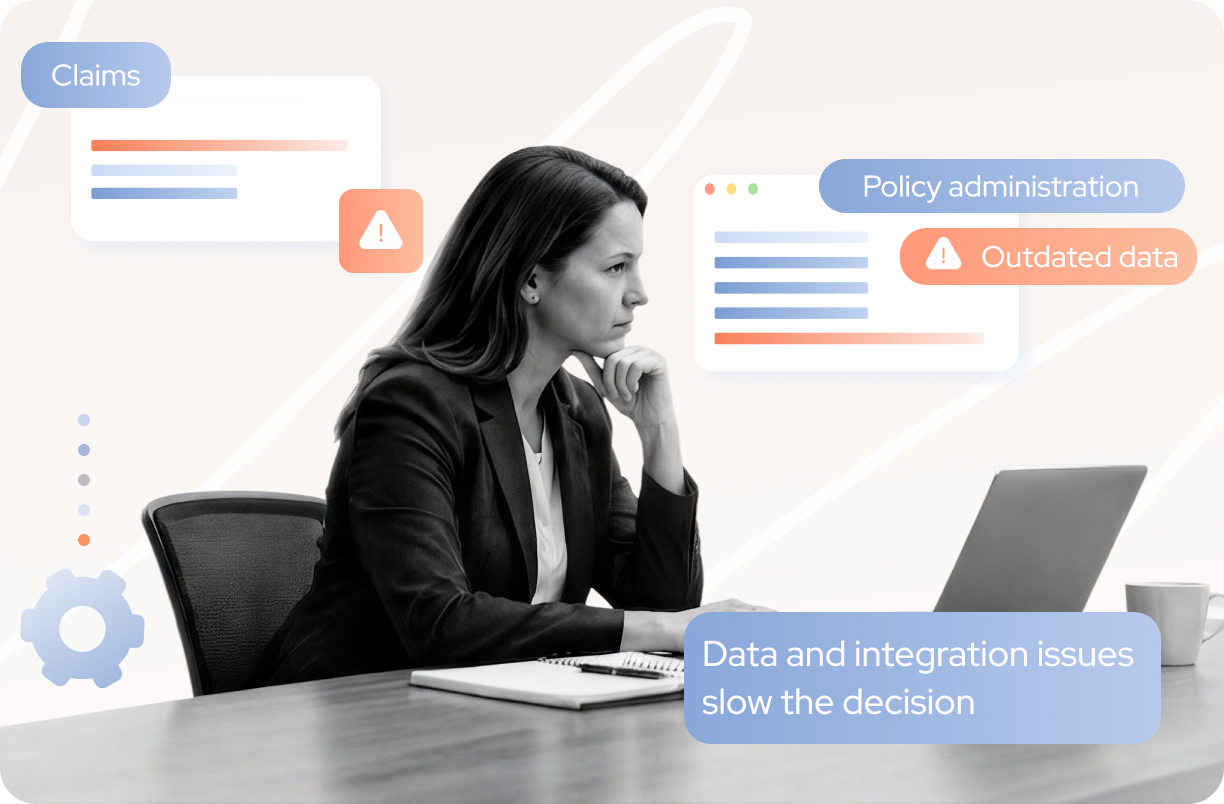
A proposal can look thorough and still quietly assume clean APIs, complete documentation, accessible data, stable requirements, and existing test coverage. None of that is stated, so none of it gets priced. It surfaces in month three as scope.
Ask the partner to list assumptions separately.
Then ask which ones have been verified, by whom, and against what. Verified means someone opened the system and looked.
In TYMIQ's delivery work, the assumptions that fail on contact with a real codebase are almost never the ones about the model. They concern data quality, undocumented integrations, and test coverage that exists on paper.
What should you expect before signing an AI development contract?
A strong proposal leaves a CTO with concrete answers to a short set of questions. What problem are we solving, and why does AI fit it. What our architecture and data can support today. Where human oversight applies and how generated output gets tested. Who owns technical decisions, what happens after launch, and how success is measured. Each answer should reference the others, since a testing plan that ignores the data access model is two documents rather than one.
Add the question most proposals skip: what happens when the model or the architecture has to change. Models get deprecated, workloads grow, systems get refactored. A sound technical plan absorbs that without a rebuild.
Generated code is a proposal until the pipeline decides otherwise. Use cases need a stated tolerance for being wrong. Metrics belong in the engagement plan before the first sprint, and assumptions belong on the page where they can be priced. None of that is about the model.
For enterprise buyers, the best partner is the team capable of taking responsibility across the full software development lifecycle. The model matters. The engineering process around it matters more.


.svg)


