


.png)



The AI industry has no shortage of success stories. New copilots are launched every week, productivity gains are reported across departments, and organizations continue increasing investment in AI initiatives. Yet many of the same companies struggle to expand those initiatives beyond a handful of use cases.
AI can deliver measurable results long before an organization is ready to scale it. McKinsey's 2025 research found that only around 23% of organizations had scaled agentic AI systems somewhere in the business, highlighting a common challenge: proving value is easier than building the conditions needed for wider adoption.
In this article, we explore why early AI success does not always translate into enterprise adoption, what changes when AI expands across teams and business processes, and how to tell whether your organization is truly ready to scale AI. Along the way, you'll find a practical AI readiness checklist to help identify the gaps that often stay hidden until expansion begins.
Why AI success and AI readiness are different things
A successful AI initiative does not automatically mean an organization is ready for AI at scale.
Many companies see strong results from a specific use case. A support team reduces response times with an AI assistant. Finance automates document processing. Operations improves forecasting accuracy. Those outcomes demonstrate business value, though they reveal surprisingly little about the systems supporting them.
The distinction comes down to two different questions. AI success asks whether a solution works. AI readiness asks whether the business can support similar solutions across teams, workflows, and departments.
The difference becomes clearer when organizations look beyond individual projects. A successful AI initiative can generate measurable results without proving that data, systems, governance, and workflows are ready to support broader adoption.
This is where capability and capacity start to diverge. A single initiative shows what AI can do. Readiness determines how broadly those capabilities can be deployed across the organization – but the executives need both.
The most common misconception about AI transformation
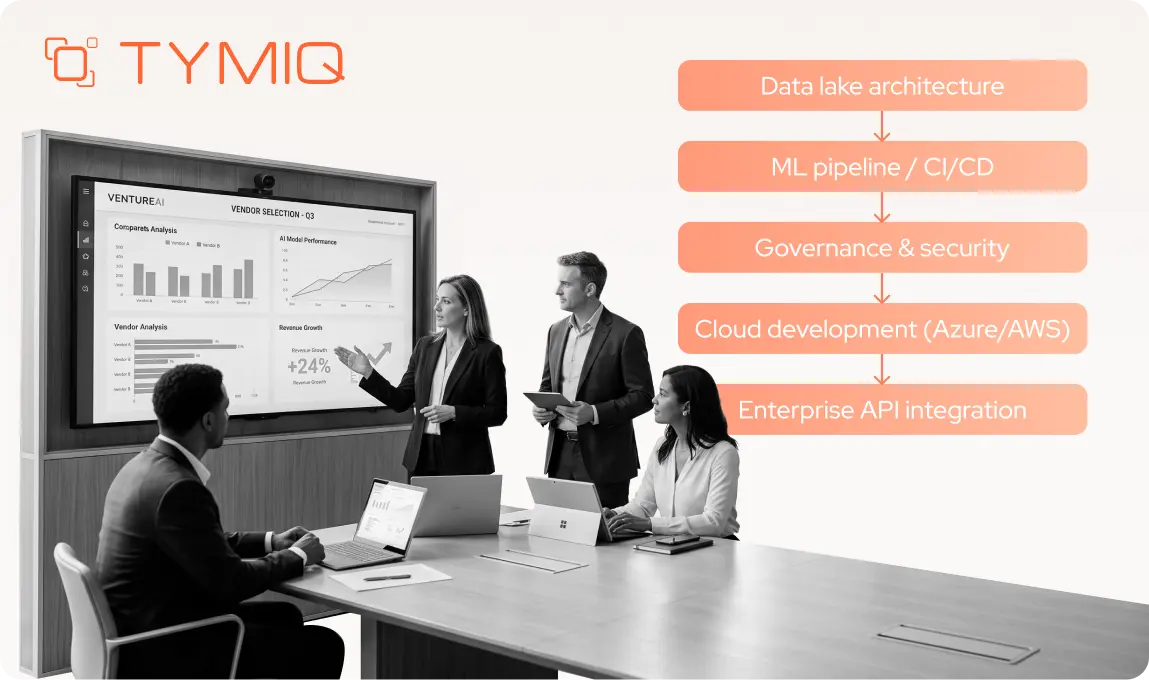
Many discussions about AI transformation begin with technology. Leaders compare models, evaluate platforms, and assess vendor capabilities. Those decisions matter, though they rarely determine whether AI becomes part of day-to-day operations.
Deloitte's 2026 State of AI in the Enterprise report found that access to sanctioned AI tools increased significantly during 2025, yet governance, operational integration, and workforce readiness continue to limit broader adoption. Drawing on responses from more than 3,200 global leaders, the report highlights a challenge appearing across industries: access to AI and organizational readiness often develop at different speeds.
A company may invest in a sophisticated AI platform and still struggle to expand adoption. In many cases, the limiting factors already exist elsewhere in the business:
- Information spread across multiple systems
- Limited access to internal knowledge
- Unclear ownership and approval processes
- Weak governance around AI outputs
- Integrations that are difficult to scale
A customer service organization offers a useful example. Leadership may focus heavily on model quality during procurement, though support outcomes also depend on access to historical conversations, CRM integrations, internal knowledge sources, and escalation workflows. The model is only one part of the overall environment.
Morgan Stanley took a similar approach when rolling out its AI assistant for financial advisors. The firm grounded responses in approved internal knowledge sources, including nearly 100,000 research reports and internal documents, while introducing governance controls and secure access mechanisms before broader deployment.
Therefore, AI transformation is rarely limited by model capabilities. Data accessibility, system interoperability, governance, and workflow design often have a greater influence on how widely AI can be adopted across the business.
The hidden barriers to AI scalability
Many AI discussions focus on models, prompts, and use cases. Infrastructure tends to receive attention only after adoption starts encountering practical limits. By then, organizations often discover that the constraints affecting AI performance have existed for years.
PwC's 2026 numbers tell an interesting story:
- 94% of operations leaders prioritize stronger AI-driven operations
- 89% say previous technology investments underdelivered
- 87% cite poor data quality as a significant obstacle
Many organizations are eager to expand AI initiatives, though the foundations needed to support them are still a work in progress.
The relationship between infrastructure and AI becomes easier to understand when looking at common deployment challenges. What appears to be an AI issue is often rooted elsewhere.
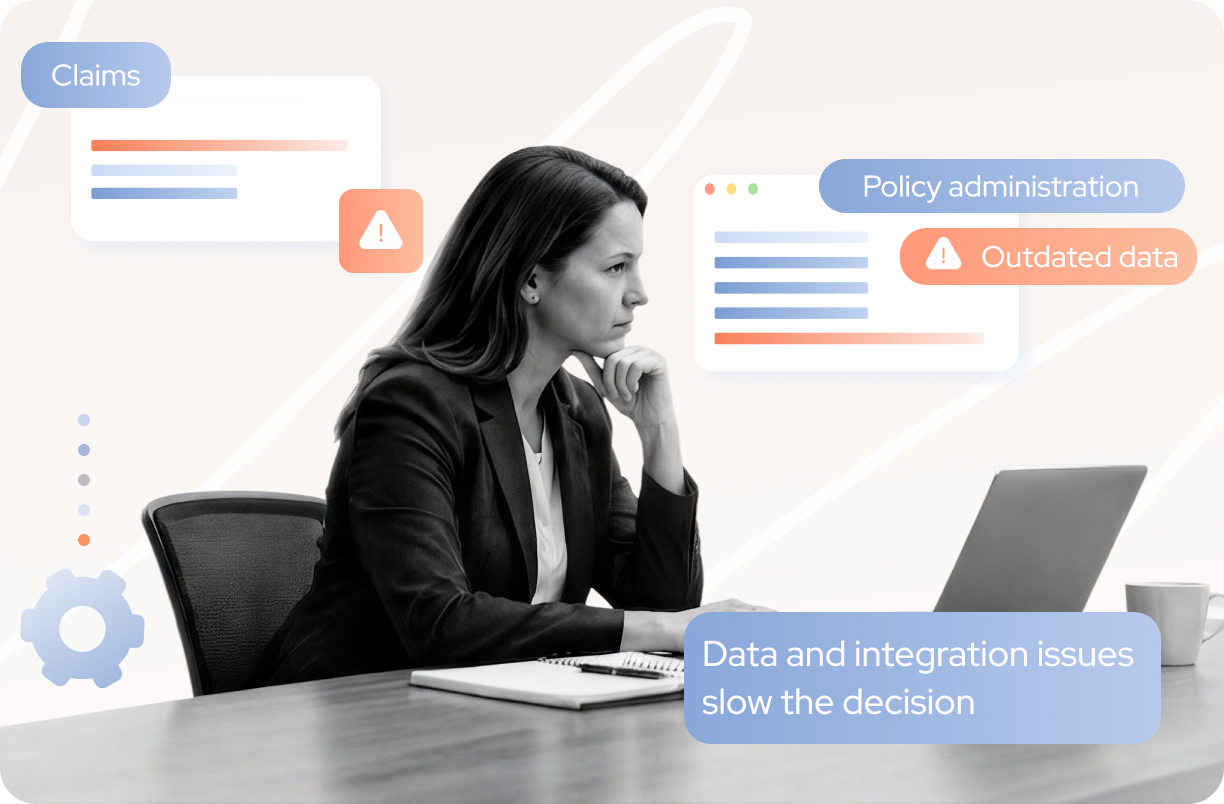
Most of these obstacles have little to do with AI itself. They reflect issues that already exist within the organization, including disconnected systems, inconsistent data, weak governance, and aging integrations. AI simply exposes those gaps faster because it depends on information moving efficiently across the business.
What enterprise AI demands from the business
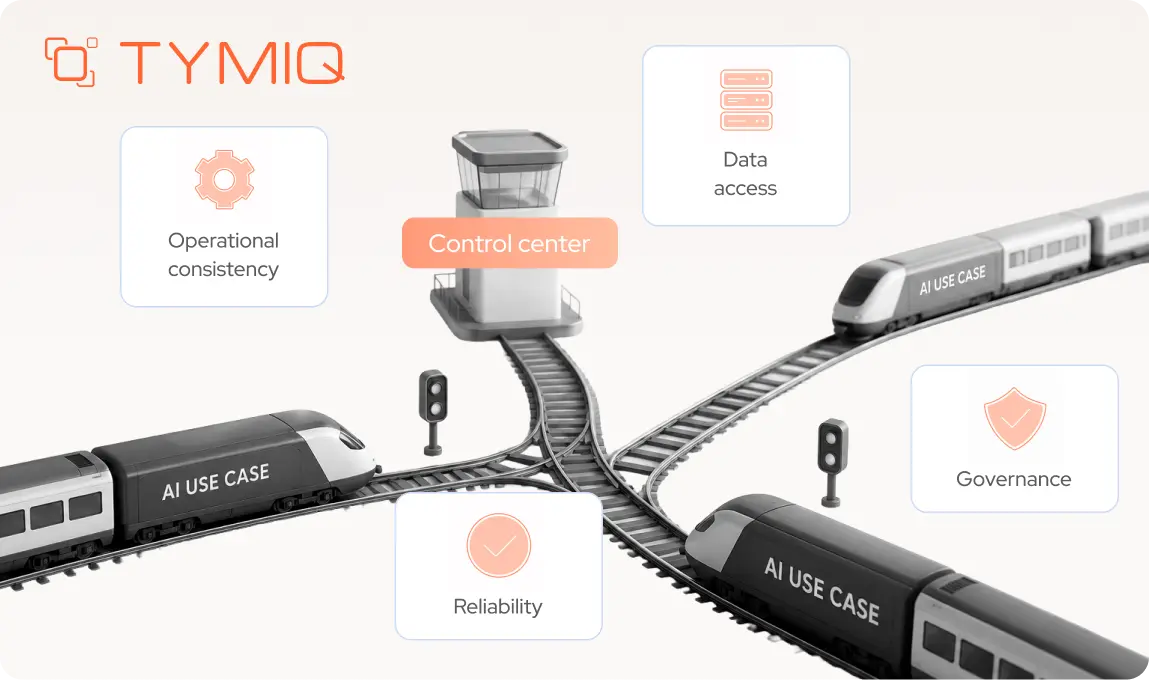
As AI adoption expands, organizations face requirements that may not be obvious during individual projects. Access to information, reliability, governance, and operational consistency become increasingly important once AI starts supporting multiple teams and business processes.
Data access becomes a business requirement
Enterprise AI depends on reliable access to information. Many organizations still operate across separate business systems, knowledge bases, and document repositories, making it difficult to provide AI with a complete and consistent view of the business.
People often work around these limitations because they know where information lives. AI systems rely on structured access. As adoption grows, data ownership, quality standards, and governance become increasingly important.
Reliability matters more than novelty
Early AI initiatives often focus on what a model can do. Enterprise environments focus on whether the results can be trusted.
Consistency becomes especially important when AI supports customer interactions, operational planning, financial processes, or other business-critical activities. Organizations need confidence that outputs are reliable, explainable, and appropriate for the context in which they are used.
Governance supports adoption
Governance helps establish clear rules around data access, human oversight, accountability, monitoring, and approval processes. These requirements may seem secondary during experimentation, though they become harder to avoid as AI expands across departments and use cases.
Scale introduces new operational requirements
Enterprise AI operates within existing systems, workflows, and compliance obligations. As adoption grows, organizations need infrastructure capable of supporting those realities consistently.
Data accessibility, governance, reliability, and operational readiness often determine how far AI adoption can extend across the business.
What AI-ready infrastructure actually looks like
The term "AI-ready infrastructure" gets used a lot, often reduced to cloud, GPUs, or model hosting. Those matter – but they’re only part of the picture.
In practice, organizations that scale AI well tend to share a few traits:
- Data is accessible without heavy manual prep
- Systems connect through clean, reliable integrations
- Governance is defined early, not retrofitted later
- Teams know who owns what – and can measure outcomes
AI-ready infrastructure about creating an environment where AI can run consistently across the business.
Connected data
Data is usually the first bottleneck. Sales uses a CRM. Support uses something else. Finance has its own system. That setup can work fine – until AI needs all of it at once.
That’s why many modernization efforts start with data. Teams need confidence that information is:
- Accessible
- Accurate
- Consistently governed
Without that, AI projects spend more time cleaning data than creating value.
Integration architecture
Integrations often become the real constraint – not the model. A single AI use case might touch:
- CRM
- ERP
- Document systems
- Communication tools
- Identity and analytics platforms
If those connections rely on scripts or manual work, scaling gets messy fast.
Modern integration focuses on repeatability – APIs, event-driven systems, standardized interfaces. In turn, AI improves reporting, automation, and visibility across the board.
Scalable infrastructure
AI workloads behave differently than traditional apps. That’s why organizations lean toward cloud and hybrid models. TrendForce estimates major cloud providers will spend over $700 billion on AI infrastructure in 2026 alone.
You don’t need that scale – but you do need flexibility. Infrastructure should grow with you, not force redesign every time something new launches.
Governance and security
Governance is what makes AI usable at scale. As adoption grows, teams need clear answers:
- Who can access what?
- When is human review required?
- How are outputs monitored?
Without that clarity, deployment slows down.
Security evolves too. AI systems often touch more data than traditional apps, which means stronger controls around permissions, audit trails, and monitoring.
Workflow integration
The technical capabilities may be impressive, yet usability often determines adoption. When employees need to switch between applications, manually transfer information, or duplicate work across systems, even well-designed AI solutions can struggle to become part of everyday operations.
Adoption improves when AI lives where work already happens:
- Support agents see suggestions inside their ticketing system
- Operations teams get forecasts in planning tools
- Finance reviews AI insights in familiar dashboards
The closer AI is to daily work, the more it actually gets used.
Building an AI infrastructure strategy
Many organizations begin AI planning with technology discussions. A stronger approach starts with business outcomes.
In our experience at TYMIQ, modernization initiatives gain momentum when teams focus on operational challenges people already experience. Once priorities are defined, organizations can evaluate whether existing systems support those objectives.
Clear objectives make modernization decisions easier.
Examples include:
- Reduce support resolution times
- Improve demand forecasting accuracy
- Accelerate customer onboarding
- Improve access to internal knowledge
- Reduce manual document processing
The objective should describe a business outcome rather than a technology implementation.
The next step involves evaluating the environment supporting AI adoption.
Questions may include:
- Can teams access trusted information easily?
- Do systems exchange information through APIs?
- Are integrations documented and maintainable?
- Can governance requirements support broader deployment?
- Are existing platforms capable of supporting additional workloads?
The goal is to understand current constraints before additional investments are made.
Most organizations do not need to modernize everything simultaneously. Identifying the most significant limitations allows teams to focus resources where they can produce the greatest impact.
Not every issue deserves immediate attention.
A legacy reporting system affecting one team may have a limited business impact. An integration bottleneck affecting customer service, operations, and analytics may deserve much higher priority.
Modernization efforts tend to produce stronger results when priorities align with measurable business outcomes.
Governance becomes easier to implement before AI adoption reaches multiple departments.
Policies around data access, approval requirements for customer-facing AI, audit trails, monitoring practices, and accountability help create consistency across future deployments. Organizations introducing these structures early often avoid delays later when AI initiatives begin expanding.
How close are you to AI-ready infrastructure?
Few organizations score perfectly across every category.
More often, one or two constraints influence adoption across multiple teams. A data access problem can affect reporting, analytics, automation, and AI initiatives simultaneously. Weak governance can delay deployment regardless of how effective a solution may be. Fragile integrations can increase maintenance requirements long after implementation is complete.
A simple assessment can help identify where the largest opportunities exist.
AI readiness checklist
In a nutshell
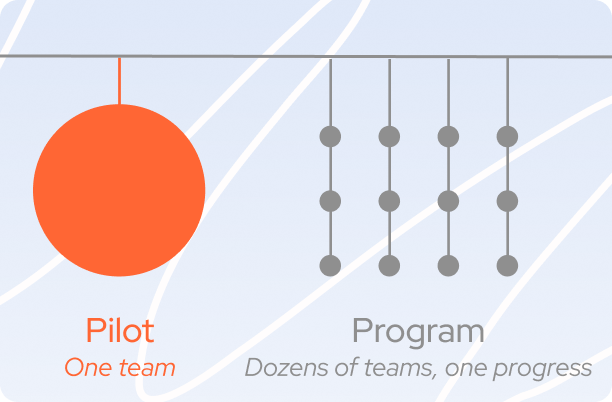
AI success and AI readiness are not the same thing. One proves a use case can deliver value. The other determines whether that value can scale across the business.
As adoption grows, model performance becomes only part of the equation. Data accessibility, integrations, governance, and operational readiness often have a greater impact on long-term success.
If AI initiatives are producing results but expansion feels harder than expected, the issue may not be the technology itself. The TYMIQ team can help identify the systems, workflows, and infrastructure gaps standing between successful AI projects and enterprise-wide adoption.
Not sure where to start? Drop us a line. We’ll help you assess your AI readiness and identify the next practical step.


.svg)


