


What happens when your most reliable system becomes the biggest obstacle to change?
For many teams, the answer shows up slowly. A feature request takes weeks instead of days. A simple integration turns into a workaround. Developers avoid touching certain parts of the code because the impact is unpredictable.
This is a common situation with legacy Delphi applications. On the one hand, they’re stable, proven, and deeply embedded in business operations. At the same time, they become harder to evolve with each passing year.
Modernization is often seen as a high-risk move that requires downtime, a full rewrite, and significant disruption. A different approach has proven effective in real production environments. The phased roadmap outlined here reflects years of hands-on experience by TYMIQ engineers working on complex Delphi systems where uptime was critical. The steps, metrics, and decisions come from practical execution, not theory, so check it out to learn how to modernize without interrupting what already works.
Why teams resist modernizing legacy Delphi systems
First of all, one might wonder why some companies, and developers in particular, resist modernization in the first place?
From the outside, the benefits seem obvious. However, inside the organization, the situation is more complex and tied to real operational constraints.
Resistance to modernization rarely comes from technical limitations. It comes from operational risk. When a system supports billing, logistics, or customer transactions, any disruption has immediate financial consequences. Engineering leaders are responsible for stability, which makes any large change feel like a potential failure point.
This concern is not theoretical. Recent industry data shows how costly and risky both legacy systems and failed modernization efforts can be. A 2025 study reported that enterprises lose around 370 million dollars annually due to issues related to legacy systems and technical debt, including failed modernization initiatives and ongoing maintenance costs.
At the same time, modernization itself is difficult to execute. Research shows that many initiatives still fail due to misalignment, poor planning, and a lack of visibility into existing systems.
In day-to-day engineering work, this risk becomes visible through specific challenges:
- Fear of downtime and lost revenue. Even short outages can stop order processing, delay shipments, or block payments.
- Limited documentation of the existing system. Knowledge is often distributed across teams or lost over time, which makes impact analysis difficult.
- Tight coupling across modules. A small change can affect multiple workflows, increasing regression risk and testing effort.
- Previous failed migration attempts. Teams remember projects that expanded in scope or required rollback after release.
- Pressure to maintain stability over innovation. When systems directly support revenue, stability is prioritized over architectural improvements.
There is also a human factor. Recent surveys show that outdated systems affect developer experience and retention. Around 58% of senior developers have considered leaving roles due to legacy technology constraints, and 86% report frustration with outdated stacks.
And this problem is often particularly acute, since some systems appear stable until one key developer becomes unavailable. At that point, missing knowledge can stop progress completely, which is exactly what the bus factor measures. We’ve already explained how to assess and reduce that risk in Delphi applications in a dedicated material.
Therefore, for business leaders, one side of the coin is the risk of disrupting critical operations during modernization, and the other is the growing cost, inefficiency, and talent loss caused by keeping legacy systems unchanged.
Perceived versus actual risk in Delphi application modernization
In such a situation, it makes sense to determine which risks are justified and which ones only appear risky but, in practice, create more long-term problems when left unaddressed.
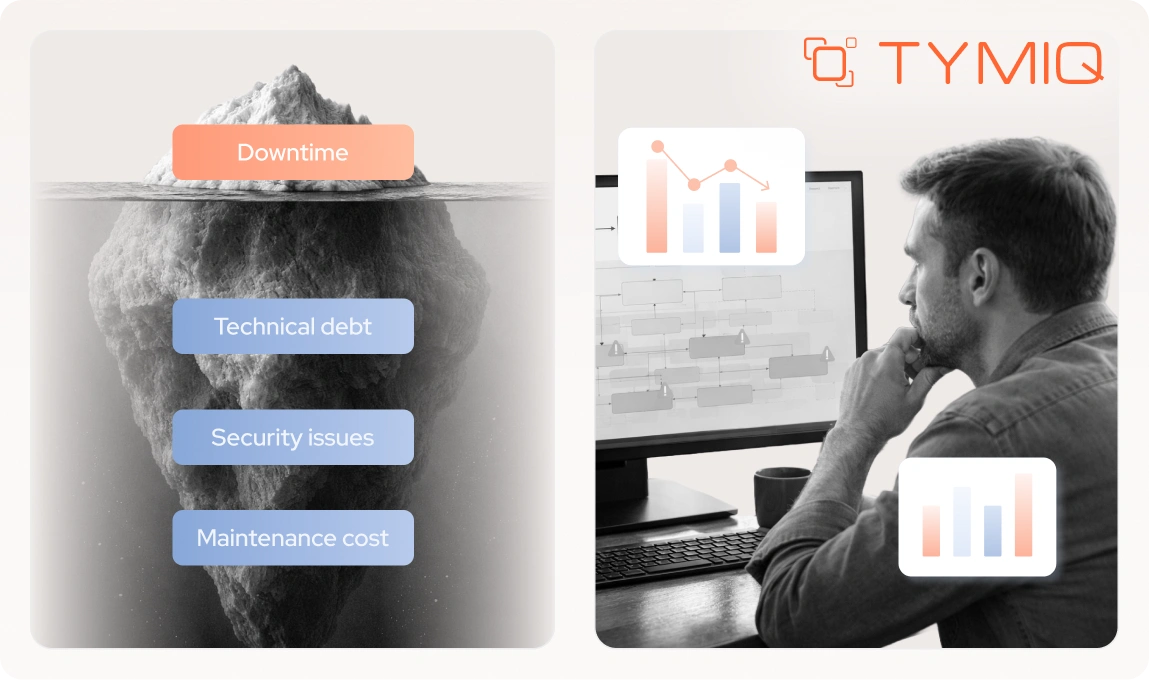
Maintaining a legacy system introduces long-term issues:
- Growing technical debt. Small workarounds accumulate and increase complexity across the codebase.
- Increased maintenance cost. More time is spent fixing issues than delivering new features.
- Limited integration with modern platforms. Connecting to APIs, cloud services, or mobile applications becomes difficult.
- Security exposure. Older components may not meet current security standards.
To make this comparison more specific for engineering and business stakeholders, the differences between perceived and actual risk can be mapped across technical and operational dimensions.
Perceived vs. actual risk in Delphi modernization
If your team delays modernization due to perceived risk, the organization accepts a different form of risk. A phased Delphi modernization strategy reduces exposure by limiting the scope of change and maintaining system availability throughout the process.
The shift from full rewrites to phased modernization
The traditional approach to migrating a Delphi application involves a full rewrite. Teams build a new system in parallel and switch once development is complete. This model concentrates risk into a single release window.
A phased approach distributes risk across smaller, controlled changes. Each phase introduces improvements while the system remains operational.
The concept aligns with the Strangler Fig pattern, introduced by Martin Fowler. New functionality is built around the existing system, and legacy components are replaced gradually.
This approach changes the execution strategy:
- The system continues to operate during modernization
- New components are introduced in controlled increments
- Each change can be validated independently
- Rollback is possible if issues occur
If your goal is to modernize a Delphi application without disrupting operations, phased modernization provides a practical path forward.
The phased roadmap to modernize a Delphi application
A structured roadmap reduces uncertainty and provides a clear sequence of actions. Each phase builds on the previous one and supports controlled transformation.
To make this roadmap easier to apply in real environments, the phases can be mapped to objectives, engineering activities, and measurable business outcomes.
Delphi modernization phases overview
Now, let’s take a closer look at exactly what happens at each stage and how to synchronize the changes with the update.
Discovery phase
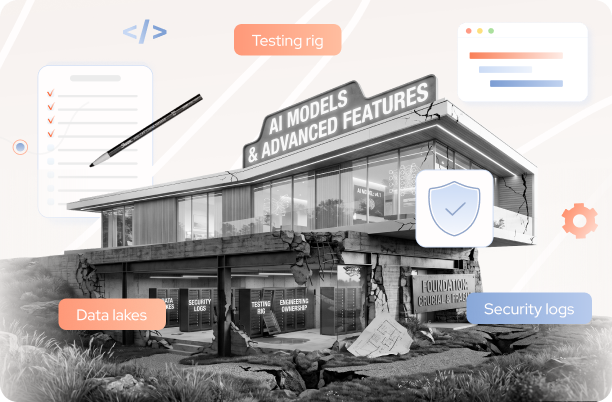
Starting modernization without a discovery phase is like making structural changes to a building without reviewing the blueprints. The system may appear stable from the outside, but critical dependencies and load-bearing components are hidden beneath the surface. With discovery, the same effort begins with a clear map of what supports the system and what can be safely changed.
Government audit findings show that modernization efforts without clearly documented plans and system understanding are significantly more likely to face cost overruns, delays, and project failure.
At a broader level, industry data continues to show that up to 70% of digital transformation initiatives fail to meet their goals, with a lack of preparation and system visibility cited as recurring causes.
Thus, this phase focuses on building a complete picture of the current system so your team can make informed decisions.
Key activities include:
- Codebase analysis to identify areas with high complexity or outdated patterns
- Dependency mapping to understand how modules interact across the system
- Architecture documentation to capture system structure and integration points
- Business process alignment to identify which workflows must remain stable
- Risk assessment to highlight fragile components and critical paths
Your team needs visibility before making changes. The discovery phase provides that foundation.
System audit
Once the system is understood at a structural level, the next step is to evaluate its technical condition. The system audit moves from mapping to assessment. It answers a practical question: which parts of the system create the most risk or limit progress?
Focus areas include:
- Performance bottlenecks that slow down critical operations or batch processing
- Obsolete libraries or unsupported components that increase maintenance risk
- Security gaps that expose the system to vulnerabilities
- Integration limitations that prevent connection to modern services
A well-executed audit allows your team to prioritize changes instead of attempting broad, unfocused updates.
Modularization
Legacy Delphi systems often evolve into tightly coupled structures over time. Business logic, data access, and user interface code are frequently intertwined. This structure makes isolated changes difficult and increases the chance of unintended side effects.
Modularization addresses this by separating the system into independent components. Each component can evolve without affecting the entire system.
Common techniques include:
- Introducing API layers around existing logic to expose functionality in a controlled way
- Extracting services from tightly coupled modules to isolate responsibilities
- Encapsulating legacy functionality to reduce direct dependencies
This approach allows your team to update one part of the system without risking the stability of others.
Microsoft also emphasizes that breaking monolithic applications into modular services improves scalability, maintainability, and deployment flexibility, especially when introducing APIs around existing systems.
A practical example can be seen in enterprise modernization programs where organizations introduce API layers over legacy systems to enable gradual migration. AWS documents this approach as a standard pattern for legacy modernization, allowing new services to coexist with existing applications while reducing system risk.
Incremental replacement
Incremental replacement is where visible progress begins. Instead of attempting to replace the entire system, teams focus on individual components that deliver measurable value.
This phase requires careful selection of targets. High-impact areas are prioritized, often where user experience or operational efficiency can improve quickly.
Typical approaches include:
- Replacing user interfaces while keeping backend logic stable
- Modernizing high-risk modules that frequently cause issues
- Running legacy and modern components in parallel during transition
Each replacement is small enough to validate in production conditions without risking the entire system.
If you are planning to migrate a Delphi application, incremental replacement provides a controlled way to introduce change without interrupting business operations.
Before defining a roadmap, it is useful to understand whether migration is the right direction at all. This article outlines the key signals and decision criteria based on real projects.
Continuous integration and improvement
A successful first release often feels like the finish line, but in reality, it marks the start of continuous improvement. Systems continue to evolve as business requirements change. Continuous integration practices support this ongoing process.
This phase focuses on building a delivery pipeline that supports frequent, safe updates.
Key practices include:
- Automated testing to validate changes before deployment
- Continuous delivery pipelines to release updates in smaller increments
- Monitoring and logging to detect issues early and respond quickly
DORA research shows that high-performing teams deploy changes up to 200 times more frequently with lower failure rates.
As a result, continuous integration allows your team to maintain momentum without introducing instability.
Measuring success during Delphi modernization
Modernization efforts need clear metrics. Without measurement, teams cannot determine whether changes improve the system or introduce new issues.
At the same time, every system is different, and target values depend on several factors:
- System size and architectural complexity
- Business criticality and uptime requirements
- Current level of technical debt
- Team structure and delivery capacity
- Integration requirements with external systems
In practice, teams often rely on a core set of KPIs to track progress and validate decisions. To make KPI tracking actionable, each metric should be tied to a measurement method and a target outcome. This allows engineering leaders to evaluate progress across both technical and business dimensions.
The table below reflects the metrics TYMIQ experts typically use when assessing Delphi modernization outcomes.
KPI tracking during Delphi modernization
Common hurdles in legacy Delphi modernization
Even with a clear roadmap, modernization efforts rarely move in a straight line. The same set of challenges appears across most Delphi systems, especially those that have been in production for many years.
These issues show up in daily engineering work and directly affect delivery speed, system stability, and decision-making.
Below, we’ll examine both frequently arising challenges and tips on how to mitigate them:
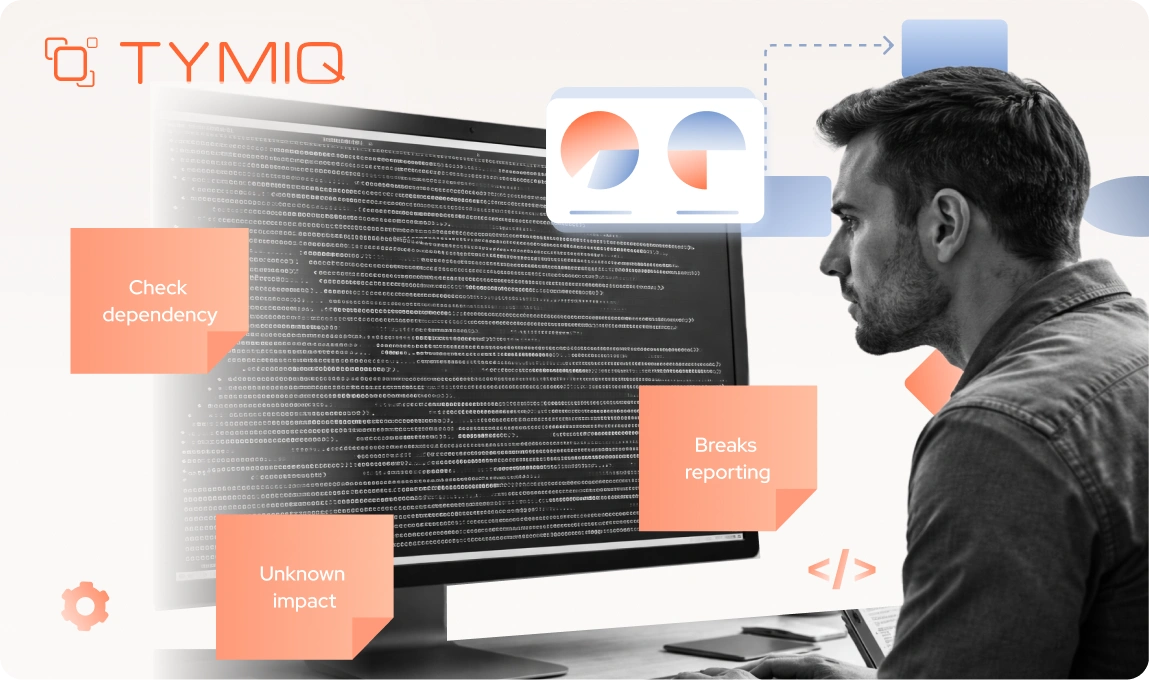
- Fear of disrupting critical operations. In many systems, a single change can affect billing, reporting, or transaction processing. Teams delay updates because rollback is difficult and the impact is hard to predict.
- Limited visibility into system dependencies. It is often unclear which modules rely on shared data structures or global state. This makes even small changes risky and increases the need for manual testing.
- Tight coupling between modules. Business logic, database access, and UI code are frequently intertwined. A change in one area can trigger side effects in unrelated parts of the system.
- Skill gaps in modern technologies. Teams maintaining Delphi systems may have limited experience with APIs, cloud platforms, or modern CI/CD pipelines. This slows down the adoption of new architectural patterns.
- Budget and prioritization constraints. Modernization competes with feature delivery and operational support. Without clear short-term value, it is often postponed.
In practice, these challenges are connected. Limited visibility leads to higher perceived risk. Higher risk leads to slower change. Over time, this increases technical debt and reduces system flexibility.
This is why early discovery and phased execution are critical. They allow teams to reduce uncertainty, isolate risk, and make progress without exposing the system to large, uncontrolled changes.
Real-world example of phased Delphi modernization
A logistics company operated a legacy Delphi system that handled order processing, inventory tracking, and billing. The system was stable but increasingly difficult to evolve.
Initial challenges included several operational constraints that affected both engineering and business teams. These issues were visible in daily workflows and had a direct impact on delivery speed and system reliability.
- Slow feature delivery. New features required coordinated changes across multiple tightly coupled modules, which increased regression risk and extended testing cycles.
- Limited integration with external platforms. The system relied on direct database access and lacked API endpoints, which made integration with partner systems slow and error-prone.
- Increasing maintenance effort. Engineers spent a significant portion of their time resolving defects in legacy code, leaving limited capacity for new development.
The modernization approach followed a phased roadmap.
Focused on discovery and audit. The team mapped dependencies and identified high-risk modules that required attention.
Introduced API layers around core business logic. This allowed external systems to interact with the application without modifying legacy code.
Replaced the user interface with a modern web application. This improved usability and reduced dependency on legacy UI components.
Incrementally refactored backend modules. Each module was replaced or updated based on business priority.
The timeline extended over 12 months, with regular releases every few weeks. Decision points were based on system metrics and business impact.
Before modernization:
- Deployment frequency was once every six weeks
- Incident resolution time averaged several hours
- Integration with external systems required manual work
After modernization:
- Deployment frequency increased to weekly releases
- Incident resolution time reduced to under 30 minutes
- External integrations became automated through APIs
The system remained operational throughout the process. Business operations continued without interruption.
Moving forward with a phased Delphi modernization strategy
Modernizing a Delphi application does not require disruption. A structured, phased roadmap allows organizations to evolve systems while maintaining stability.
If you are evaluating modernization, the first step is to establish visibility. Start with a Discovery Phase to understand your current architecture, dependencies, and risks. This provides a clear foundation for planning and decision-making.
From there, define priorities based on business impact. Focus on areas where modernization will reduce risk, improve performance, or increase delivery speed. Introduce modularization, replace components incrementally, and track progress through measurable KPIs.
A phased approach allows your team to move forward with controlled, predictable changes. Each step delivers value while preserving the reliability that the business depends on.
FAQ
1. Can you modernize a Delphi application without rewriting it?
Yes. You can modernize a Delphi application without a full rewrite by using a phased approach that introduces new components alongside existing functionality.
This method focuses on gradual change instead of replacing the entire system at once. It allows teams to improve architecture, introduce modern technologies, and reduce technical debt while keeping the system operational. In practice, this often includes wrapping legacy logic with APIs, updating the user interface, and replacing high-risk modules step by step.
Common approaches include:
- Adding API layers to expose existing functionality
- Modernizing the UI without changing the backend
- Replacing critical modules incrementally
If you are evaluating whether migration is necessary, this guide provides a structured way to assess your situation.
2. How long does Delphi modernization take?
The timeline for Delphi modernization depends on system size, complexity, and business constraints, but most projects follow a phased roadmap over several months to two years.
Smaller applications with limited integrations can be modernized within a few months. Larger systems with complex dependencies, multiple integrations, and high uptime requirements typically require 12 to 24 months. The key factor is not speed, but maintaining system stability throughout the process.
Typical timeline factors include:
- Number of modules and dependencies
- Level of technical debt
- Required uptime and business continuity
- Scope of modernization, partial vs full migration
A phased approach allows teams to deliver value continuously instead of waiting for a single final release.
3. What is the first step in Delphi modernization?
The first step in Delphi modernization is the Discovery Phase, where the system is analyzed to understand its structure, risks, and dependencies.
This phase creates a clear picture of how the application works before any changes are made. Without this step, teams often face unexpected issues, delays, and rework during implementation. Discovery provides the data needed to define a realistic roadmap and prioritize modernization efforts.
Starting with discovery reduces uncertainty and allows engineering leaders to make informed decisions based on real system data.
4. Is downtime required during modernization?
No. Downtime is not required when using a phased Delphi modernization strategy.
Modernization can be performed while the system remains operational by introducing changes incrementally. New components are added alongside existing ones, and traffic is gradually shifted as each part is validated. This approach minimizes risk and avoids disruption to business operations.
Techniques that support zero-downtime modernization include:
- Running legacy and modern components in parallel
- Replacing modules incrementally
- Using APIs to decouple new and old functionality
This approach allows organizations to modernize safely while maintaining service availability and business continuity.


.svg)


